Blog · September 17, 2026
Rubber, TPO, or Fiberglass? How to Tell What Kind of Roof Your RV Has
Plenty of RV owners in Tampa Bay have never been on their roof and have no idea what it is made of. That is normal. But the answer matters more than you might think. It decides which cleaners are safe, which sealants will stick, and how the roof will hold up through a Florida summer. Buy the wrong product and you can damage a roof that was in good shape.
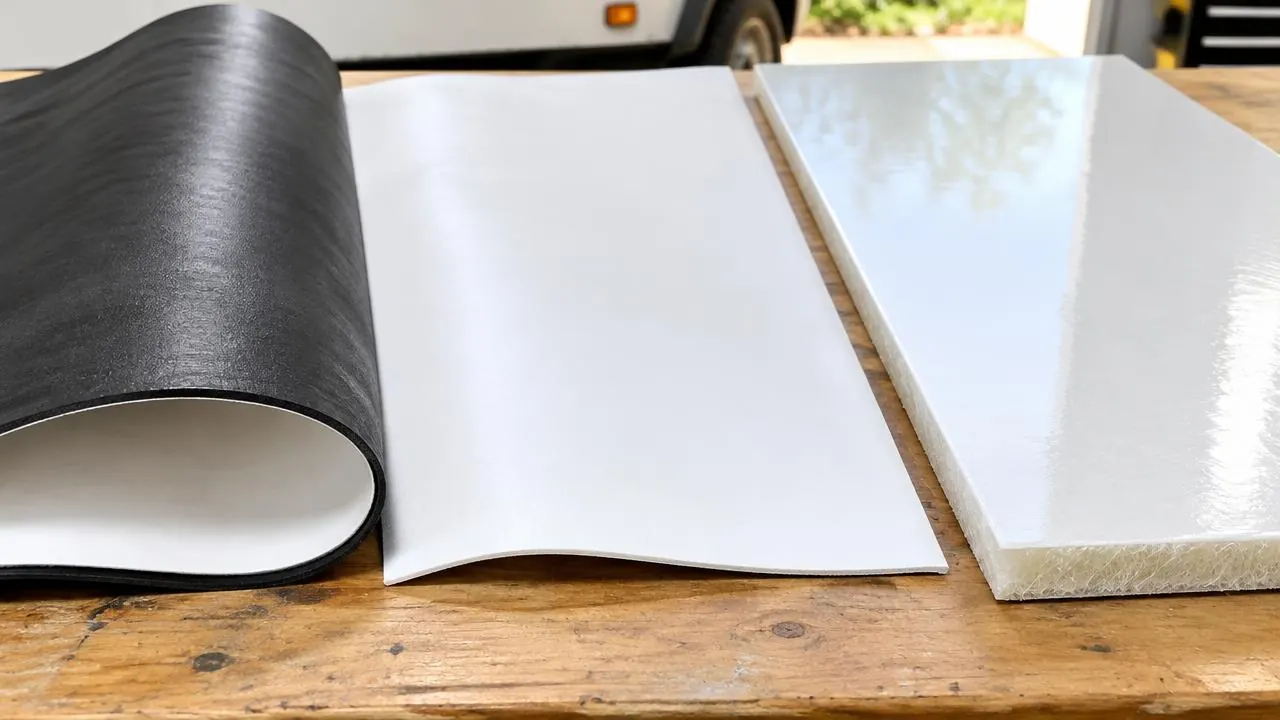
Most RV roofs fall into three families: rubber, TPO, and fiberglass. Some older units have aluminum roofs too, but those are less common now. Here is how to tell what you have.
Start with your paperwork
The easiest answer is often in the owner's manual, the original sales paperwork, or a sticker inside a cabinet or near the door. If you bought the RV used and have none of that, the roof itself will tell you.
Rubber roofs
Rubber roofs are very common on travel trailers and fifth wheels. They are usually white or light gray on top.
- Look: flat, matte, and slightly textured. It does not shine.
- Feel: soft and a little flexible when you press on it. It can feel almost like a thick rubber mat.
- Edges: you may be able to see a dark backing layer where the material is trimmed at the edges.
- Aging sign: chalking. A rubber roof that rubs off white on your hand is typical as it gets older.
In the Florida heat, rubber roofs tend to chalk and the sealant around fixtures dries out. They hold up well when kept clean and sealed.
TPO roofs
TPO is a type of plastic membrane that looks similar to rubber at first glance.
- Look: usually bright white with a slight sheen, smoother than rubber.
- Feel: firmer and a little slicker than rubber, with less give.
- Seams: seams are often heat welded, so they can look like a slightly raised flat line rather than a taped joint.
- Aging sign: TPO usually does not chalk the way rubber does. Instead, look for the surface wearing thin or the seams separating.
TPO reflects a lot of sun, which helps in Florida, but heavy UV over time still wears the surface and stresses the seams.
Fiberglass roofs
Fiberglass roofs are common on many motorhomes and some higher-end trailers.
- Look: hard and glossy, like the shiny sides of many RVs. It often wraps smoothly over the edges.
- Feel: rigid. Press on it and it does not give at all.
- Sound: tap it lightly with a knuckle and it sounds hard, not dull.
- Aging sign: fading, a dull or rough surface, and fine cracks in the gel coat. Sealant around fixtures still wears out like any other roof.
Fiberglass handles sun better than soft membranes, but it is not immune. Cracks in a fiberglass roof can let water reach the wood underneath without much warning.
Why it matters for cleaners and sealant
This is the main reason to know your roof type. Some cleaners made for one material can soften, stain, or break down another. Sealants are the same way. A sealant that bonds well on one surface may peel off another within months. Before you buy anything for the roof, check that it is made for your specific roof type. If a label is vague, skip it.
Before you buy a used RV
If you are shopping for a used RV around Tampa Bay, the roof deserves as much attention as the engine or the floor plan. A worn-out roof can turn a good price into an expensive project.
- Ask what the roof is made of and when it was last resealed.
- Look for patches. A few are normal. A roof covered in them is a warning.
- Press on the ceiling inside near the front, rear, and every vent. Soft spots point to water under the roof.
- Look at the inside corners and around windows for stains.
- If you can see the roof safely, walk the edges with a ladder and look at the seams.
- Ask how and where the RV was stored. Years in full Florida sun ages a roof faster than covered storage.
When to call a pro
If you cannot tell what kind of roof you have, or you are looking at a used RV and want to know whether the roof is near the end of its life, it is worth having someone look. Knowing whether a roof needs care, repair, or full replacement up front saves money and surprises.
We can come to you anywhere in the Tampa Bay area and tell you what you are working with. Call or text us.
Need a hand with this? Call or text (813) 455-5206.
See our RV Roof Replacement service