
Blog · August 27, 2026
Caring for the Wood Inside Your RV: Cabinets, Trim, and Paneling in a Humid Climate
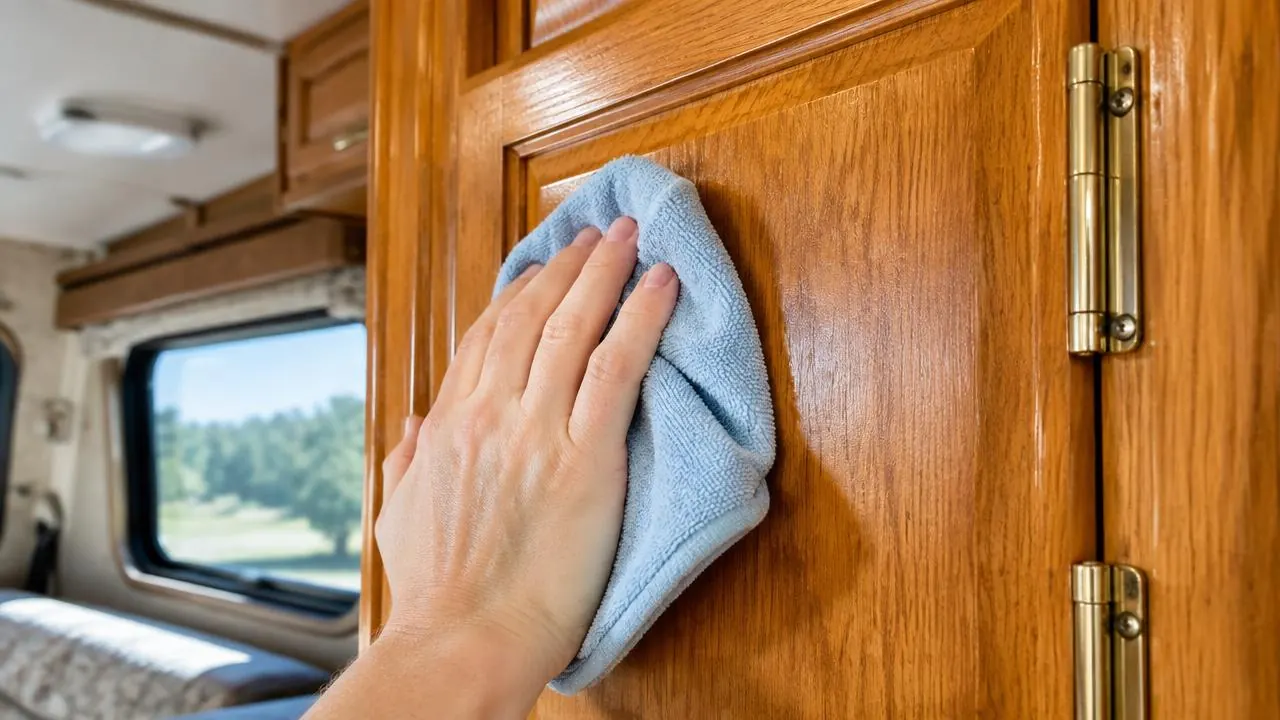
The woodwork inside an RV has a tougher life than the cabinets in your kitchen at home. It rides down bumpy roads, it lives through big temperature swings, and in Florida it spends much of the year in damp air. Over time that shows up as doors that stick, trim that lifts, and hinges that wiggle loose.
With a little regular care, most of this can be slowed down or caught early.
Why RV woodwork moves
Wood takes on moisture from the air and gives it back. When it takes on water, it swells. When it dries, it shrinks. In a house with steady air conditioning, that movement is small. In an RV that sits closed up in the summer, then gets aired out, then sits again, the wood goes through that cycle over and over.
Much RV woodwork is also built light to save weight. Thin panels, pressed wood, and veneers are more sensitive to moisture than solid lumber. Pressed wood in particular can swell at the edges and does not always shrink back.
Add road vibration and you have the three things that loosen everything over time: swelling, shrinking, and shaking.
Gentle cleaning
Clean RV wood the way you would clean nice furniture, not the way you would clean a floor.
- Dust with a soft, dry cloth. Dust holds moisture against the surface.
- For grime, use a cloth that is barely damp, then dry the wood right away.
- Skip harsh cleaners and anything abrasive, which can wear through thin veneers quickly.
- Never spray cleaner directly on the wood. Spray the cloth.
- Pay attention to edges and corners, where veneers tend to start lifting.
Tightening hinges and latches
Loose hardware is the most common woodwork complaint in RVs, and it is often the easiest to fix if you catch it early.
- Every few months, open each cabinet and check the hinge screws with a hand screwdriver.
- Snug them gently. Do not crank down hard, because the screws often go into soft or pressed wood that strips easily.
- If a screw spins and will not tighten, stop. The hole is stripped, and forcing it makes it worse.
- Check that every latch catches firmly. A door that swings open while driving can break its own hinge.
- Look at drawer slides and make sure they are seated and not sagging.
Protecting wood near water
Most of the worst woodwork damage starts near water sources.
- Wipe up splashes around the kitchen sink and bathroom vanity right away.
- Look under sinks regularly for drips at the fittings. A slow drip can soak the cabinet floor for months unnoticed.
- Keep a small mat or tray under anything stored under the sink that might leak.
- Watch the trim around windows. Condensation running down the glass soaks the wood at the bottom corners.
- Run the vent fan while cooking and showering so steam does not settle on cabinets.
Signs it needs more than care
Regular care keeps good woodwork in good shape. It will not fix wood that is already damaged. Look for:
- Edges that have swollen and crumbled.
- Veneer that is bubbling or peeling away.
- Hinges that will not stay tight no matter what.
- Dark staining or softness that points to water.
- Doors or drawers that no longer line up even after the RV has dried out.
When repair beats replacement
People often assume a damaged cabinet has to be torn out. Many times it does not. A stripped hinge mount can be rebuilt. A sagging door can be rehung. A cracked face frame can be repaired. Lifted trim can be reattached. Repairing what you have keeps the look of your RV consistent and is often simpler than finding a match.
Replacement makes more sense when the wood itself is soft from water, when pressed wood has swollen apart, or when you want the space to work differently, like adding shelves or changing a cabinet layout.
If you have woodwork that is loose, broken, or just not working the way it should, we come to you anywhere in the Tampa Bay area. Call or text and tell us what needs attention.
Need a hand with this? Call or text (813) 455-5206.
See our RV Interior Carpentry and Cabinet Repair service